

Acoustic Pendants: Lighting That Also Brings Comfort to a Room
Featured Products | July 10, 2026 | The Lighting Exchange
A beautiful room isn’t just something you see — it’s something you feel, hear, and experience.
Most lighting decisions are made with the eyes: how a fixture looks, how it throws light, how it photographs. But the body reads a room differently. A space can be visually stunning and still feel exhausting to sit in, simply because it's loud. That flat, echoing hum of overlapping voices in a restaurant or open office isn't just background noise — it's a low-grade stressor most people can't name but everyone feels. Acoustic pendants exist to fix that, and comfort is really the whole point.
Comfort First, Function Built In
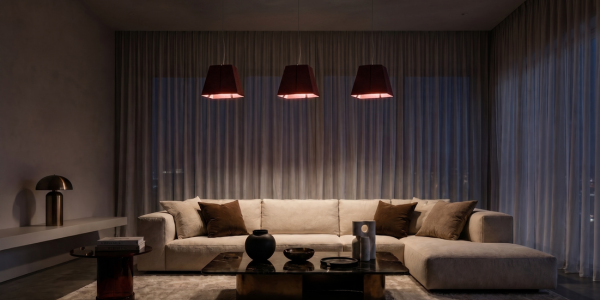
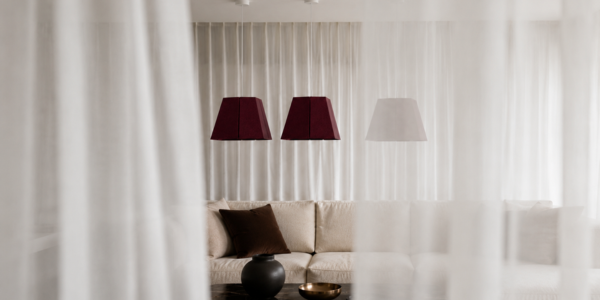
An acoustic pendant looks like a standard suspended light fixture, but its housing or shade is made from sound-absorbing material — felted polyester, PET fiber, or an acoustic foam core — instead of solid metal or glass. While it lights the room below, it's quietly pulling sound out of the air above.
The effect is felt before it's understood. People relax faster in a quieter room. Conversations feel easier. A meal lasts longer because no one is straining to hear the person across the table. None of that shows up on a spec sheet, but it's exactly what clients remember about a space — whether they enjoyed being there.
Why This Matters More as Spaces Open Up
Open floor plans, exposed ceilings, and hard, polished materials created the visual language of modern design — but they also removed the soft surfaces that used to absorb sound naturally. Reverberation crept back in as a side effect nobody asked for. Adding acoustic panels afterward solves the problem but costs a design compromise and a separate budget line. An acoustic pendant solves it invisibly, using a fixture the room already needed, so comfort becomes part of the lighting plan instead of an add-on.
Where People Feel It Most
Restaurants and cafés, open-plan offices, libraries, co-working spaces, and residential great rooms with vaulted ceilings are where the comfort gap is widest — and where an acoustic pendant makes the biggest difference to how a space actually feels to spend time in.
A Performance Note
Acoustic performance is measured by NRC (Noise Reduction Coefficient), a 0–1 scale of sound absorption. It's worth asking for this number directly — a pendant that looks acoustic isn't always performing acoustically.
FAQ
Is comfort really the main benefit of acoustic pendants, more than the light itself? For many spaces, yes — the lighting is expected, but the comfort of a quieter room is what people actually notice and remember.
How quickly do people notice a quieter room? Almost immediately, even if they can't identify why — lower noise reduces the effort of hearing and talking, which reads as relaxation.
What is NRC and why does it matter? It measures how much sound a material absorbs; higher NRC means better absorption and more comfort.
Do acoustic pendants replace the need for other acoustic treatment? Not always in very echo-prone rooms, but they meaningfully reduce the need for additional treatment.
Do residential spaces benefit as much as commercial ones? Yes — a vaulted living room or open kitchen can feel just as loud and benefits just as much from the comfort improvement.
Other News Content by:
BYIBA
Magnetic Track Lighting: The System That Moves When Your Design Does
Featured Products | August 18, 2026 | The Lighting Exchange