
Die-Cast vs. Extruded Aluminum: Choosing the Right Alloy for Outdoor Fixtures
Design Tips & Techniques | September 24, 2026 | The Lighting Exchange
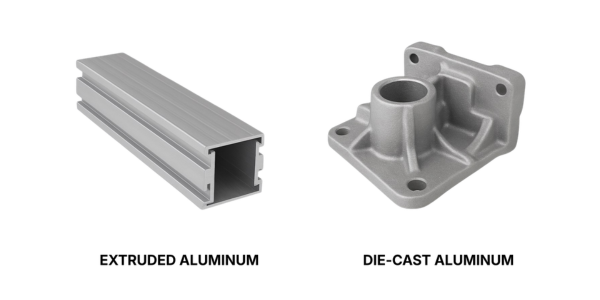
Two Processes, Two Different Jobs
|
Die-Cast Aluminum |
Extruded Aluminum |
|
|
How it's made |
Molten metal injected into a mold under pressure |
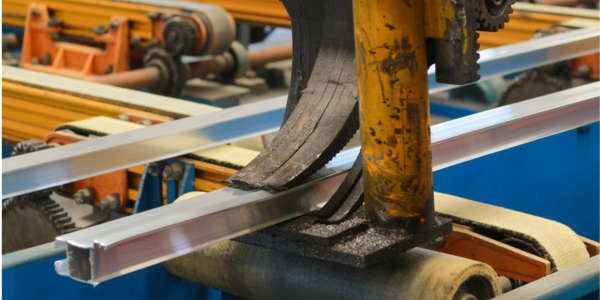
Solid billet pushed through a shaped die |
|
Best geometry |
Sculpted, detailed, complex shapes |
Straight, consistent, linear profiles |
|
Typical use |
Spotlight housings, sculpted inground bodies |
Linear grazers, elongated wall washers |
|
Alloy example |
EN AB 44100, or 12# / ADC12-grade |
EN AW-6060 T5 |
Neither process is "better" in the abstract. Die-casting wins on detail and sculpted form. Extrusion wins on long, straight consistency. The fixture's shape decides which one you need — not the other way around.
Why This Matters for Linear Fixtures Specifically
A linear wall washer or step-edge grazer running several feet in one continuous line needs a housing that stays dimensionally consistent along its entire length. That's extrusion's whole job — a single die pushes out a uniform cross-section for the full run, without the seams or joints a segmented cast piece would introduce.
Try to die-cast a long linear run instead, and you're either casting it in sections (introducing seams) or fighting the mold's practical size limits. Extrusion sidesteps the problem entirely.
Why Sculpted Housings Go the Other Direction
A spotlight body with curves, mounting bosses, optic seats, and detailed surface geometry can't be extruded — extrusion only produces a consistent cross-section pushed through a die, not a three-dimensional sculpted shape.
Die-casting fills a hardened steel mold under pressure, capturing fine detail and complex geometry that extrusion simply can't replicate. That's why nearly every spotlight housing and sculpted inground body across Bullard's collections is die-cast, not extruded.
The Alloy Grades, and Why They're Specified Differently
- EN AB 44100 — a die-casting alloy chosen for strength and detail. Used for more sculpted shapes.
- 12# / ADC12-grade — a die-casting alloy balancing cost, castability, and long-term color retention when powder-coated. The standard for higher-volume housings.
- EN AW-6060 T5 — an extrusion-grade structural alloy with high oxidation resistance. Used specifically for straight, linear profiles.
All three resist oxidation in outdoor use — the difference between them is castability, detail capability, and cost, not corrosion performance.
What a Specifier Should Actually Do With This
- Linear runs (step edges, façade bases, long wall washers): specify extruded aluminum, EN AW-6060 T5, for dimensional consistency along the run.
- Sculpted or detailed housings (spotlights, feature inground fixtures): specify die-cast aluminum, EN AB 44100 or 12# ADC12 depending on volume and cost target.
- Mixed projects: it's normal, and often correct, to spec both within the same collection — extruded for the linear grazing, die-cast for the sculpted feature fixtures.
Both processes get finished the same way after forming — powder coat for color and UV stability — so the choice between them comes down entirely to the shape you actually need, not the final appearance.
FAQs
- Is die-cast aluminum stronger than extruded aluminum? Both offer strong structural performance for outdoor lighting; the real difference is geometry capability, not raw strength — die-cast handles sculpted detail, extrusion handles long, consistent linear runs.
- Why can't a linear wall washer just be die-cast? Die-casting is limited by practical mold size for long, continuous runs, and casting in sections introduces visible seams. Extrusion produces a single continuous profile with no seams along the run.
- Do die-cast and extruded aluminum finish the same way? Yes — both are typically finished with powder coat for color and UV stability, so the final appearance doesn't reveal which process was used underneath.
- Which alloy resists corrosion better? All three grades discussed here — EN AB 44100, 12#/ADC12, and EN AW-6060 T5 — offer strong oxidation resistance for outdoor use. None is meaningfully weaker on corrosion; they're differentiated by castability and cost instead.
- Can one fixture use both die-cast and extruded components? Yes — it's common for a fixture family to combine a die-cast body with extruded structural elements where each process's strengths are actually needed.
Other News Content by:
Bullard Bollards
Symmetrical vs. Asymmetrical Lighting — Choosing the Right Distribution for Your Project
Design Tips & Techniques | August 18, 2026 | The Lighting ExchangeSolar Security Bollards — A Smarter Way to Protect a Site
Featured Products | July 10, 2026 | The Lighting ExchangeSecurity Bollards: Life-Saving Architectural Infrastructure
Featured Products | June 03, 2026 | The Lighting Exchange